TL;DR
- Best Sanity CMS use cases include enterprise multilingual websites, media & publishing platforms with high editorial volume, e-commerce product catalogs with dynamic attributes, learning management systems with interactive content, and custom internal tools or dashboards tailored to specific business processes.
- Sanity enables structured content schemas for complex data modeling, real-time collaboration and live editing for distributed teams, GROQ-powered flexible queries that overcome traditional API limitations, integrated asset management with global CDN delivery, and webhooks with ISR revalidation to keep Next.js sites performant and up-to-date.
- Core strengths: clean APIs with GraphQL-like flexibility, instant visual previews, outstanding editor experience, proven scaling for thousands of documents, and significantly lower backend maintenance than legacy CMS platforms.
- Sanity shines in React/Next.js projects that require flexible content modeling, seamless live previews (Draft Mode support), automatic ISR integration, and custom editorial interfaces without rigid templates. It fits teams that prioritize developer freedom (custom plugins, GROQ), editorial efficiency (intuitive interface), and future-proof composable architecture that scales from MVP to enterprise without painful migrations
Introduction
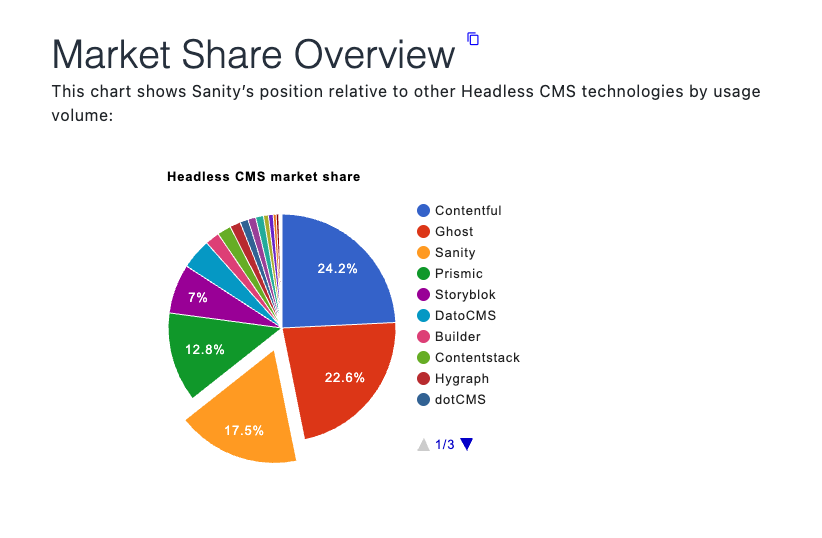
Sanity has established itself as a leading player in the headless CMS market, with over 17% market share and trust from businesses around the world. It’s a composable content cloud designed to empower both technical and non-technical teams. Sanity best use cases can range from retail websites to knowledge repositories for medical companies. Strong APIs, customizable workflows, and an advanced visual editor make it a great choice for projects that need to be flexible and performant.
At Pagepro, we’ve worked on a wide range of Sanity projects, like enterprise websites or large-scale applications with custom workflows. We’ve seen how Sanity improves content management. Drawing from our experience, we prepared this article detailing Sanity best use cases. It’ll explore the features and advantages that make it the right fit for many types of websites.
We’ll help you understand why Sanity is one of the most powerful tools in the content management space and how it can take your project to the next level.
If you’d prefer watching over reading, we’ve prepared a video on this topic.

What is Sanity CMS?
Sanity is a headless, API-first content management system built around the idea that content should be structured data – not locked inside a templated interface. Instead of managing HTML pages, you manage content as discrete, reusable pieces that can be delivered to any frontend, app, or platform through clean APIs.
At its core, Sanity consists of two parts:
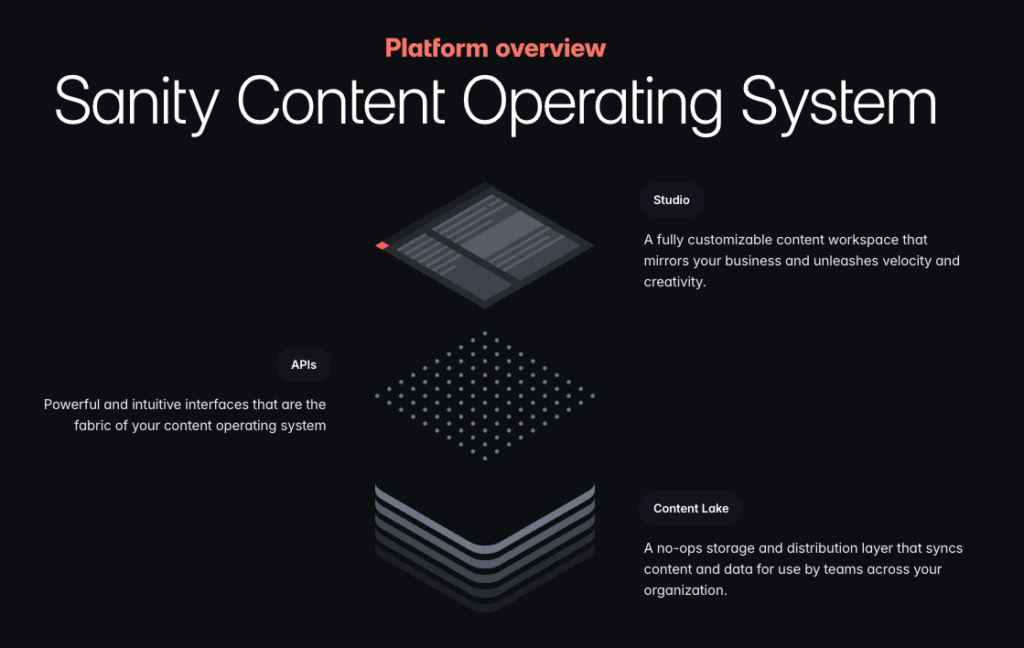
- Sanity Studio – a fully customizable content editing environment built in React, where your team creates, edits, and organizes content daily
- Content Lake – a cloud-hosted database that stores all your content as structured data and serves it in real time to any channel or platform
Developers define the content schema in code, which means the editing interface reflects exactly what a project needs – nothing more, nothing less.
What separates Sanity from traditional CMS platforms like WordPress is where control sits. In WordPress, the CMS owns the presentation layer – themes, page builders, and plugins shape both how content is managed and how it’s displayed. In Sanity, the frontend is entirely decoupled. Your content lives in one place and can power a Next.js website, a mobile app, a digital kiosk, or all three simultaneously, without duplicating or reformatting anything.
Sanity also uses GROQ (Graph-Relational Object Queries), its own query language that gives developers fine-grained control over exactly what data gets fetched and in what shape. For teams used to REST APIs returning overfetched payloads, this is a meaningful improvement in both performance and developer experience.
Here’s what makes Sanity stand out from other headless CMS options:
- Fully customizable Studio – adapt the editing interface to your exact workflow, not the other way around
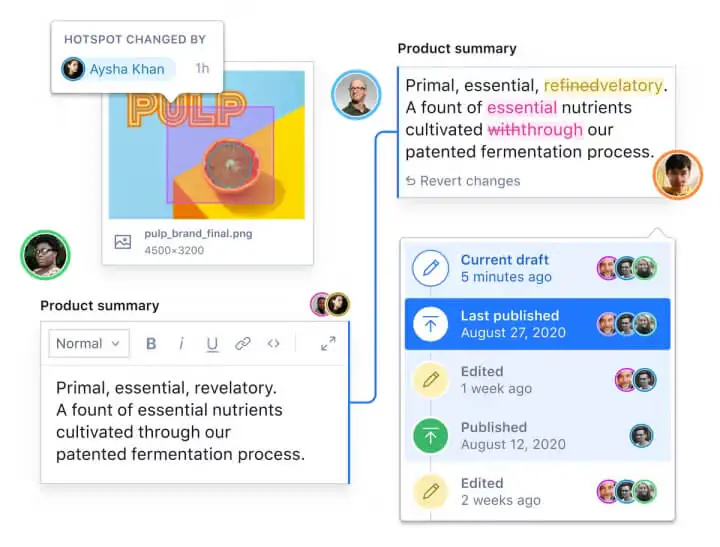
- Real-time collaboration – multiple editors can work on content simultaneously without conflicts
- GROQ querying – fetch precisely the data you need, reducing payload size and improving frontend performance
- No vendor lock-in on the frontend – connect Sanity to any framework, including Next.js, Astro, or SvelteKit
- Scales without migration – the same setup that works for an MVP handles enterprise-level content volume
With over 17% market share among headless CMS platforms and adoption by companies like PUMA, Eurostar, and Morning Brew, Sanity has moved well beyond the “developer experiment” stage. It’s production-grade infrastructure for content at scale.
The Flexibility of Sanity: More Than a Headless CMS
Sanity is a Content Operating System that adapts to your business requirements. It has all the features of a modern headless CMS designed for high-traffic environments and demanding enterprise workloads. At the same time, it stays flexible enough for projects of any size.
What sets it apart from other CMSes is its ability to fit into your workflows. Unlike other solutions, it doesn’t force you into rigid templates, plugins, or pre-defined structures.
While many CMSs focus only on content management, Sanity prioritizes the developer experience, providing exposed APIs that allow you to integrate with any system or tool.
What is Sanity Studio?
Sanity Studio is a customizable content workspace that lets teams create, edit, and organize content for websites and apps. It’s the heart of your content management and where editors collaborate to keep it up to date.
Since it’s React-based, developers can tailor it to your needs, while editors get a clean and fast environment for daily work.
What is Content Lake in Sanity?
The Sanity Content Lake is a cloud database and central hub where all your content is stored, updated, and delivered in real time. Every piece of content is stored as structured data, so it’s easy to query, version, and reuse across websites, apps, and any other digital product.
Since it’s fully managed by Sanity, there’s no need to maintain servers or worry about scaling.
Interested in using Sanity in your project?
Top 3 Use Cases for Sanity
Use Case 1: Use Sanity for Enterprise Websites at Scale
One of the best uses for Sanity is managing content for enterprise websites.
In our latest project, a global corporation operating across multiple regions with complex content requirements chose Sanity for their website. The site housed multilingual content, region-specific pages, blogs, landing pages, and resource hubs. Each region’s team needed tailored access to manage their localized content securely.
Sanity’s multi-language support allowed all this content to reside in a single dataset, saving on costs and simplifying data management. By integrating with Azure Active Directory for SSO, the headless CMS ensured enterprise-grade security and intuitive user management. Sanity’s APIs delivered consistent performance, even under heavy traffic.
Why Sanity Is the Best Choice for Enterprise Websites
- Multi-Language and Localization Support: Manage multiple languages and regions in a single dataset to reduce costs.
- SSO Integration for Security: Integrate with authentication systems like Azure Active Directory for secure and efficient user management.
- Granular Roles and Permissions: Provide access for regional teams and specific content management tasks.
- High Performance at Scale: Handle high-traffic demands without compromising site speed or reliability.
- Flexible Content Lake: Adapt to the complex data structures required by global enterprises.
- Real-Time Collaboration: Allow multiple teams to collaborate on content at the same time.
- Enhanced Preview Capabilities: Provide real-time previews for content teams to improve output quality before publishing.
- Cost Efficiency: Avoid additional charges for extra datasets.
Use Case 2: Media and Publishing Platforms
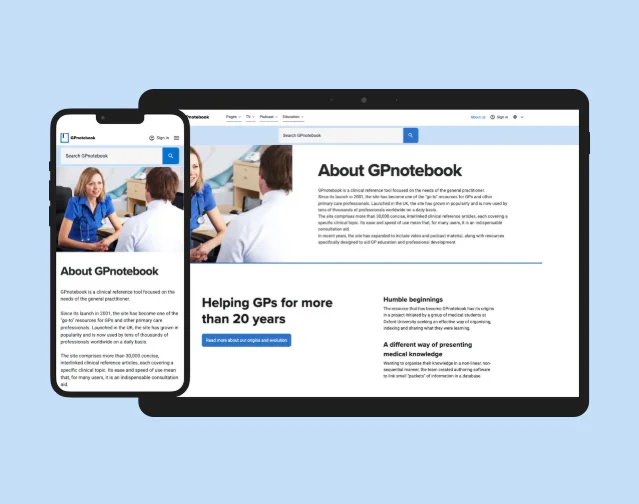
This platform we’ve worked on hosted over 40,000 structured medical content pieces with complex relationships and compliance needs. Sanity can handle such complexity easily, but in this project it was chosen for its adaptability.
The client’s legal obligations required a longer content history than the default 90 days. Using Sanity’s exposed APIs, we customized history retention to meet compliance standards. Real-time collaboration, enabled their editors to work simultaneously, and custom workflows allowed every piece of content to pass through proper approval channels.
Why Sanity Is the Best Choice for Media and Publishing
- Scalability for High-Volume Content: Manage thousands of structured content pieces with complex relationships and dependencies.
- Custom History Retention: Extend version history to meet regulatory and compliance requirements.
- Real-Time Collaboration: Enable simultaneous editing by multiple users.
- Content Relationships: Model intricate relationships between content types.
- Integration Capabilities: Use APIs to connect with analytics tools, external platforms, or legacy systems.
- Snapshot Generation: Provide visual documentation of content states for audit or archival purposes.
Use Case 3: Custom Workflows for Large Applications
In another project, we implemented a workflow where content creation and verification were managed through custom tools.
Integrating AWS Cognito with Sanity allowed us to build a user-friendly admin panel. It made the verification process easier without exposing sensitive AWS settings to end-users.
Another example of customization was the use of AI-powered translation. As soon as a document was published, translations for multiple languages were generated automatically. As you can see, Sanity supports innovation without the need to build a custom CMS from scratch.
Why Sanity Is the Best Choice for Large Applications
- Exposed API for Customization: Build tailored workflows and integrations to match unique business requirements.
- AI-Powered Features: Automate processes like translations and content repurposing for efficiency.
- User-Friendly Custom Panels: Simplify workflows with bespoke admin interfaces.
- Content Repurposing: Utilize the same content across multiple platforms, including web, mobile, and more.
- Third-Party Integrations: Connect with external tools like AWS, analytics platforms, and CRMs.
- Rapid Development: Use Sanity’s tools to create solutions faster than traditional custom CMS builds.
Other Use Cases for Sanity CMS
Marketing Websites
Sanity Studio is a great asset for marketing websites. It’s visual editing experience rivals competitors like Storyblok, letting content creators build visually rich landing pages with reusable content blocks. It’s a popular choice for businesses focused on creating dynamic and engaging experiences.
Why Sanity Is the Best Choice for Marketing Websites
- Block-Based Content Editing: Empower content teams to create and reuse predefined blocks for efficiency and consistency.
- Enhanced Visual Editor: Offer previews for a better content creation experience.
- Customizable Studio: Adapt the interface to meet specific branding and workflow needs.
- Collaboration-Friendly: Streamline marketing workflows with real-time collaboration and role-based access control.
- Integration-Ready: Connect with CRM, analytics, and marketing automation tools.

E-Commerce Platforms with Sanity as Headless CMS
Online stores will benefit a lot from Sanity’s integration with Shopify and other e-commerce tools. It adds value to e-commerce platforms by improving product information management and supporting relationships between products.
Why Sanity Is the Best Choice for E-Commerce
- Product Information Management (PIM): Centralize product metadata for consistency across channels.
- Shopify Integration: Improve workflows for product descriptions, categories, and relationships.
- Scalable API: Handle high-traffic e-commerce demands with no effort.
- Customizable Data Models: Adapt product catalogs to unique business needs.
- Seamless Multi-Channel Support: Use the same product data for web, mobile, and other channels.

Learning Platforms
When it comes to managing educational content, Sanity provides the flexibility learning platforms need to implement functions like tracking user progress and delivering multimedia learning materials.
Why Sanity Is the Best Choice for Learning Platforms
- Structured Content Management: Organize lessons, chapters, and quizzes with ease.
- Progress Tracking: Store user progress data to personalize learning experiences.
- Scalability: Handle large volumes of content and users
- API-Driven Delivery: Integrate with learning management systems (LMS) and mobile apps.
Mobile App Backends
The ability to handle data communications with apps, API focus and customizability are huge advantages for devs working with Sanity. It’s a good option for a mobile application backend.
Why Sanity Is the Best Choice for Mobile App Backends
- Fast Setup: Quickly configure backends for mobile apps.
- Scalable API: Ensure consistent performance for high-traffic applications.
- Customizable Workflows: Tailor data structures and workflows to app-specific requirements.
- Multi-Platform Compatibility: Share data across web, iOS, and Android apps.

Final Thoughts
Choosing a CMS is a strategic decision. It’s especially important for technical leaders managing complex projects or scaling businesses.
In our years of work, we’ve seen Sanity’s impact on content management. It enables frontend teams to work smarter and faster. The combination of flexibility, strong APIs, and intuitive user experience makes it a great for many businesses.
Sanity use cases range from enterprise websites to e-commerce platforms and custom applications. If it seems like a good match for your project, let’s chat and make sure it’s the right fit for what you’re building.
Ready to start using Sanity CMS?
Read More
- Why Sanity is the Best CMS for the Healthcare Industry
- Sanity and Nextjs for CI / CD
- Migrate from Contentful to Sanity: A Complete Developer Guide
- Best CMS in 2026: Sanity vs WordPress
- 5 Best Headless CMS Platforms in 2026
- Headless CMS Guide: Sanity vs Contentful
FAQ
Sanity.io is a Content Operating System offering teams a flexible way to create, manage, and deliver content to any website or application.
It uses structured content stored in the Sanity Content Lake and a customizable editing environment called Sanity Studio. Developers can tailor the entire workflow, while editors get an intuitive platform to update content in real time.
Sanity is a headless CMS, but it goes beyond the traditional definition. It functions as a content operating system – providing structured content storage, a fully customizable editing environment, real-time collaboration, and APIs that let you deliver content to any channel. The key difference is that Sanity is designed to adapt to your workflows and data structures, rather than forcing you into predefined templates or rigid content models.
Sanity separates content from your frontend and delivers it as structured data through APIs.
Content creators use Sanity Studio to edit and manage content, while the Sanity Content Lake stores everything in the cloud and updates it in real time. Developers then pull that content into websites or apps using Sanity’s APIs. The result is a full control over how and where the content is displayed.
Sanity is used for managing and delivering content across websites, mobile apps, e-commerce platforms, and custom digital products. Its most common use cases include enterprise websites with complex content structures, media and publishing platforms with high editorial volume, and large applications that require custom workflows and integrations. At Pagepro, we’ve used it across projects ranging from global multilingual websites to medical content platforms with over 40,000 structured documents.
Sanity best use cases include marketing sites, e-commerce, blogs, product catalogs, and apps. It’s great for any project that needs flexible, well-structured content and a smooth editing experience.
Yes, Sanity has a free plan you can use indefinitely within the included usage limits. It gives access to all core features including real-time collaboration, unlimited content types, and Sanity Studio. For projects that grow beyond those limits – in terms of API requests, bandwidth, or team size – paid plans are available with transparent usage-based pricing.
Sanity Studio is open source and available on GitHub, which means you can inspect the code, build custom plugins, and contribute to the ecosystem. The Content Lake backend, however, is a managed cloud service and not open source. This distinction matters for teams with strict data residency or self-hosting requirements – Sanity’s backend runs on Sanity’s infrastructure, which is something to evaluate if your project has specific compliance needs.
Sanity is used by companies including PUMA, Morning Brew, Eurostar, and Amplitude – organizations that need structured, scalable content workflows across multiple channels. Its adoption spans industries from retail and media to healthcare and financial services, reflecting its flexibility across very different content requirements.
Sanity offers a free plan that covers smaller projects and includes real-time collaboration, unlimited content types, and sufficient API and bandwidth quota for personal projects or low-traffic sites. Paid plans – Growth and Enterprise – unlock higher usage limits, advanced access controls, custom SSO, and dedicated support. Pricing scales with usage rather than seat count, which makes it cost-effective for teams that need flexibility without paying for unused capacity.
The right choice depends on your project’s complexity and team setup. WordPress is the better fit for straightforward content sites where non-technical users need a familiar, plugin-rich environment without developer involvement. Sanity is the stronger choice when you need flexible content modeling, multi-channel delivery, real-time collaboration across distributed teams, or a custom editorial interface that matches your specific workflow. For projects built on Next.js or other modern frameworks, Sanity integrates significantly more cleanly than WordPress.