
As digital products expand across websites, mobile apps, and multiple customer touchpoints, traditional CMS architectures are increasingly unable to keep pace. The global headless CMS market is projected to grow from $1.51 billion in 2025 to $3.04 billion by 2030 (Research and Markets), reflecting a shift from experimentation to strategic adoption — with composable architectures and AI-driven personalization accelerating enterprise demand.
Selecting the right implementation partner has become a critical decision. This guide evaluates the top headless CMS development companies in 2026 on four criteria: platform expertise (Sanity, Contentful, Strapi), independent client validation via Clutch and G2 (4.7+ minimum), modern frontend capabilities in Next.js and React, and proven outcomes across performance, SEO, and scalability.
What does a Headless CMS agency do?
A headless CMS agency designs, implements, and optimizes API-first content platforms that decouple the backend (content management) from the frontend (presentation). Unlike traditional CMSs like WordPress or Drupal, headless systems deliver content via APIs (REST or GraphQL), enabling teams to build fast, flexible frontends with technologies such as Next.js, React, Vue, or mobile and IoT apps — while editors work in a clean, user-friendly interface.
In practice, a headless CMS agency acts as a strategic partner in digital transformation, bridging business content needs with technical execution. They handle platform selection (e.g., Sanity, Contentful, Strapi, Storyblok), content modeling, API integrations, migrations from legacy CMSs, and high-performance frontend development — ensuring scalable, future-proof digital experiences.
- Platform expertise and setup: Choosing and configuring the right headless CMS (self-hosted like Strapi or cloud-native like Contentful) based on scalability, security, and team workflows.
- Migration and integration projects: Seamlessly moving content from monolithic CMSs to headless architectures without disrupting operations, often using custom workflows for large-scale data transfers.
- Frontend development and optimization: Building fast, SEO-optimized experiences with frameworks like Next.js, focusing on Core Web Vitals, edge deployment (e.g., Vercel), and omnichannel delivery.
- Content strategy and modeling: Creating structured, reusable content types that support personalization, AI-driven features, localization, and multi-channel publishing.
- Ongoing support: Performance tuning, security enhancements, and iterative improvements for long-term scalability.
Headless vs. Traditional CMS: Key Differences and Benefits
Traditional CMS platforms bundle content management with built-in themes and rendering, making them quick to set up for simple sites but rigid at scale. Headless CMS flips this model:
- Flexibility: Developers choose any frontend language/framework without CMS constraints; content can feed websites, apps, wearables, kiosks, or voice interfaces from one source.
- Performance & SEO: Decoupled frontends enable faster load times (often 2x quicker), better Core Web Vitals, and edge caching — critical for 2026’s mobile-first, AI-optimized search environments.
- Scalability & Omnichannel: Cloud-native headless platforms auto-scale during traffic spikes and support true composable architectures for personalized, real-time experiences.
- Developer & Team Productivity: Content editors gain independence (no dev tickets for updates), while developers avoid “CMS lock-in” and focus on innovation.

For scale-ups, SaaS companies, enterprises, and eCommerce brands, partnering with a specialized headless CMS agency accelerates time-to-market, reduces technical debt, and future-proofs digital experiences — especially as AI personalization and edge computing become standard.
When to hire a headless CMS developer: 4 Real-World Scenarios
While many teams can experiment with headless CMS platforms like Sanity, Contentful, or Strapi on their own, the complexity of enterprise-grade implementations — custom integrations, migrations, content modeling for scale, and optimizing for performance/SEO — often demands specialized expertise. Partnering with a dedicated headless CMS agency accelerates delivery, minimizes risks, and ensures long-term scalability, especially when internal resources are stretched or deadlines are tight.
Here are four common real-world scenarios where bringing in a headless CMS agency proves essential:
- Legacy CMS Migration for Enterprises with High Technical Debt Your organization is stuck on a monolithic CMS (e.g., WordPress or Drupal) that’s slow, hard to maintain, and limits omnichannel expansion. Migration involves mapping thousands of pages, restructuring content models, preserving SEO rankings, and integrating with existing tools like CRMs or eCommerce backends.
Why an agency? In-house teams risk prolonged downtime, data loss, or suboptimal architecture. Agencies handle end-to-end migrations with proven workflows, reducing time-to-launch by months and ensuring zero SEO regression. Real-world outcome: Many enterprises see 30–50% faster load times and improved Core Web Vitals post-migration, boosting organic traffic. - Scaling Omnichannel Experiences for SaaS or eCommerce Brands You need consistent, personalized content across websites, mobile apps, IoT devices, smart displays, and future channels — while enabling rapid updates without developer bottlenecks.
Why an agency? Building true omnichannel delivery requires advanced content modeling, API orchestration, localization, and edge caching. Agencies specialize in composable stacks (e.g., Next.js + Sanity/Contentful) that support “create once, publish everywhere,” leading to higher engagement and brand consistency. As adoption surges — with headless CMS enabling seamless multi-channel delivery — agencies help avoid fragmented workflows that plague DIY approaches. - Implementing AI-Personalization and Advanced Features Under Tight Deadlines You’re planning to add AI-driven content recommendations, dynamic personalization, or edge computing for global users, but your team lacks deep experience with GROQ queries (Sanity), GraphQL federation, or integrations with tools like Vercel/Akamai.
Why an agency? These projects demand expertise in 2026 trends like AI integrations and performance optimization. Agencies deliver faster prototypes, secure architectures, and measurable results (e.g., reduced server load via CDNs and better SEO through structured data), freeing your team for core product work. - Resource-Constrained Scale-Ups Needing Rapid Iteration Without Overhead As a growing SaaS company, you want headless flexibility for A/B testing, fast MVPs, and developer freedom — but lack the bandwidth for infrastructure management, security hardening, or ongoing maintenance.
Why an agency? DIY headless setups (especially self-hosted like Strapi) can become a distraction. Agencies provide pay-for-outcomes models, quick wins like Lighthouse score improvements, and scalable support, helping you launch features 2–3x faster while controlling costs.
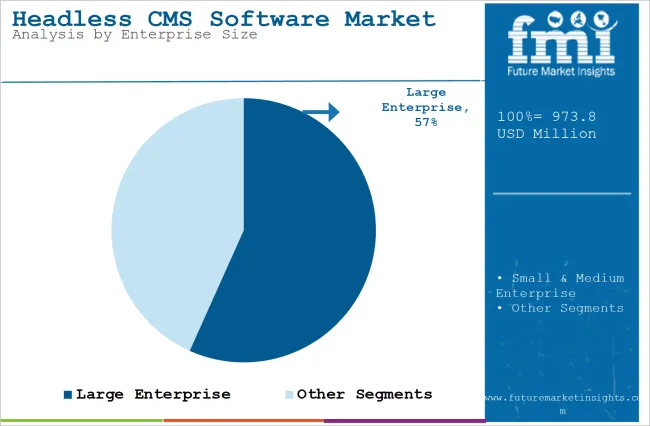
In 2026, with headless adoption accelerating (e.g., projected 25.3% annual increase in sectors like government portals by end-2026 per Future Market Insights), partnering early prevents common pitfalls like technical debt or missed opportunities in composable commerce.
Book a free consultation to assess your stack and roadmap
Comparison of Headless CMS Agencies
This quick-reference table compares the top headless CMS agencies in 2026 based on key decision factors. Use it to shortlist partners that match your needs — whether you’re prioritizing Sanity expertise, enterprise scalability, or budget-friendly migrations.
| Agency | CMS Expertise | Best For | Key Strengths | Clutch Rating |
|---|---|---|---|---|
Pagepro | Sanity, Contentful, Strapi, Next.js integrations | Enterprise & SaaS scale-ups needing frictionless migrations | Pay-for-outcomes model, 92% retention, SEO/Core Web Vitals focus, Sanity official partners | 4.9 |
The Frontend Company | Contentful, Sanity, Strapi, React/Next.js | UI/UX-focused frontend transformations & headless commerce | High referral rates (9.8/10), performance optimization, long-term partnerships | 5.0 |
Brainhub | Contentful, Strapi, Sanity, React/Next.js | Scalable SaaS & enterprise web products with headless integrations | Full-stack engineering, cloud infrastructure expertise, reliable delivery for complex projects | 4.8 |
Naturaily | Storyblok, Sanity, Strapi, Jamstack | Multilingual eCommerce & headless migrations | 4.9 Clutch, Shopify integrations, Lighthouse 95+ scores, multilingual expertise | 4.9 |
| Bits Orchestra | Contentful, Strapi, .NET integrations | Enterprise .NET + headless builds | Scalable APIs, custom integrations, strong case studies | 4.8 |
| 9thCO | Contentful, Sanity | SEO-friendly migrations & traffic growth | Omnichannel focus, proven SEO boosts, client-centric approach | 4.8 |
| Blazity | Contentful, localization-heavy | Multilingual sites & eCommerce | Localization expertise, fast MVPs, reliable delivery | 4.7 |
| Culture Foundry | Sanity, Contentful, custom headless | Full-cycle transformations & strategy | Problem-solving focus, creative tech solutions, enterprise readiness | 4.7 |
| SUNZINET | Contentful, Strapi, enterprise compliance | Large-scale European enterprises | Compliance & security focus, multilingual scaling | 4.7 |
| SCube | Strapi, Contentful, custom modeling | Fintech & content-heavy projects | Secure APIs, custom content models, high-security needs | 4.7 |
How We Ranked the Best Headless CMS Agencies

To create this top 10 headless CMS agencies list for 2026, we applied a transparent, data-driven methodology focused on real-world performance and buyer priorities. This isn’t based on sponsorships or superficial metrics — it’s curated by Pagepro’s experts drawing from independent sources like Clutch reviews, G2 insights, agency portfolios, case studies, and industry rankings from 2025–2026 (e.g., Clutch Global awards, DesignRush rankings).
We evaluated and prioritized agencies using these key criteria:
- Proven Headless CMS Expertise — At least 30%+ of projects in headless architectures, with demonstrated work in leading platforms (Sanity, Contentful, Strapi, Storyblok) and integrations (Next.js, React, GraphQL/REST APIs). We reviewed case studies for migration complexity, custom modeling, and omnichannel delivery.
- Client Reviews & Ratings — Minimum 4.7+ average on Clutch (with 20+ verified reviews where possible), emphasizing feedback on technical depth, communication, deadlines, and outcomes like SEO improvements or load time reductions.
- Frontend & Tech Stack Proficiency — Strong capabilities in modern frameworks (Next.js, React, Vue) for performance optimization, Core Web Vitals, edge computing, and composable setups—critical for 2026 trends like AI personalization.
- Measurable Outcomes & Case Depth — Evidence of quantifiable results (e.g., faster publishing, reduced developer tickets, scalability for enterprises/SaaS/eCommerce), plus enterprise readiness (security, compliance, global scaling).
- Transparency & Long-Term Fit — Agencies with clear processes, long-term partnerships, and avoidance of “buzzword-only” claims.
This rigorous filter ensures the list delivers genuine value — helping CTOs, product leads, and marketers identify partners that drive frictionless migrations and future-proof results.
Top Headless CMS Agencies
This core section profiles the top headless CMS agencies in 2026, based on our evaluation criteria (proven Sanity/Next.js expertise, 4.9 Clutch rating, high retention, and measurable client outcomes). Each profile follows consistent formatting for fair comparison: overview, key services, tech stack, strengths/limitations, best fit, and a notable case study.
#1 Pagepro – Sanity and Next.js Specialists for SaaS and Enterprise Migrations
Overview
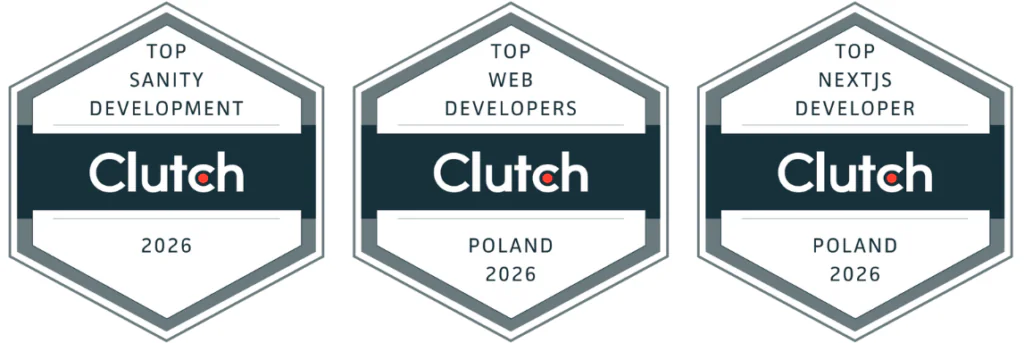
Pagepro is a Poland-based (global delivery) agency founded in 2010, specializing narrowly in Next.js, React Native (Expo), and Sanity CMS. As an official Sanity development partner, they’ve delivered dozens of headless projects for scale-ups and enterprises. Known for a “frictionless development” model and pay-for-outcomes approach, they emphasize value delivery, with awards like Clutch Global Winner and Forbes Diamond Poland.
Key Services
- Headless CMS development company services including custom APIs and content modeling
- Sanity CMS implementation, GROQ queries, and real-time collaboration setups
- Migrations from legacy/monolithic CMS with zero SEO loss
- Next.js frontend builds optimized for Core Web Vitals and edge performance
- Omnichannel content delivery (web, mobile, IoT)
- Post-launch support and iterative improvements
- Technical audits and feasibility studies
Technology Stack
- CMS: Sanity (primary), Contentful, Strapi, WordPress
- Frontends: Next.js, React, TypeScript
- Tools: Vercel, GraphQL/REST APIs, GROQ, Expo (for mobile)
- Other: Node.js, cloud infrastructure
Strengths
- Deep Sanity/Next.js focus leads to faster, cleaner implementations
- 92% client retention and 4.9 Clutch rating from verified reviews
- Pay-for-outcomes pricing reduces risk and aligns with business goals
- Proven SEO/load time improvements (e.g., faster publishing workflows)
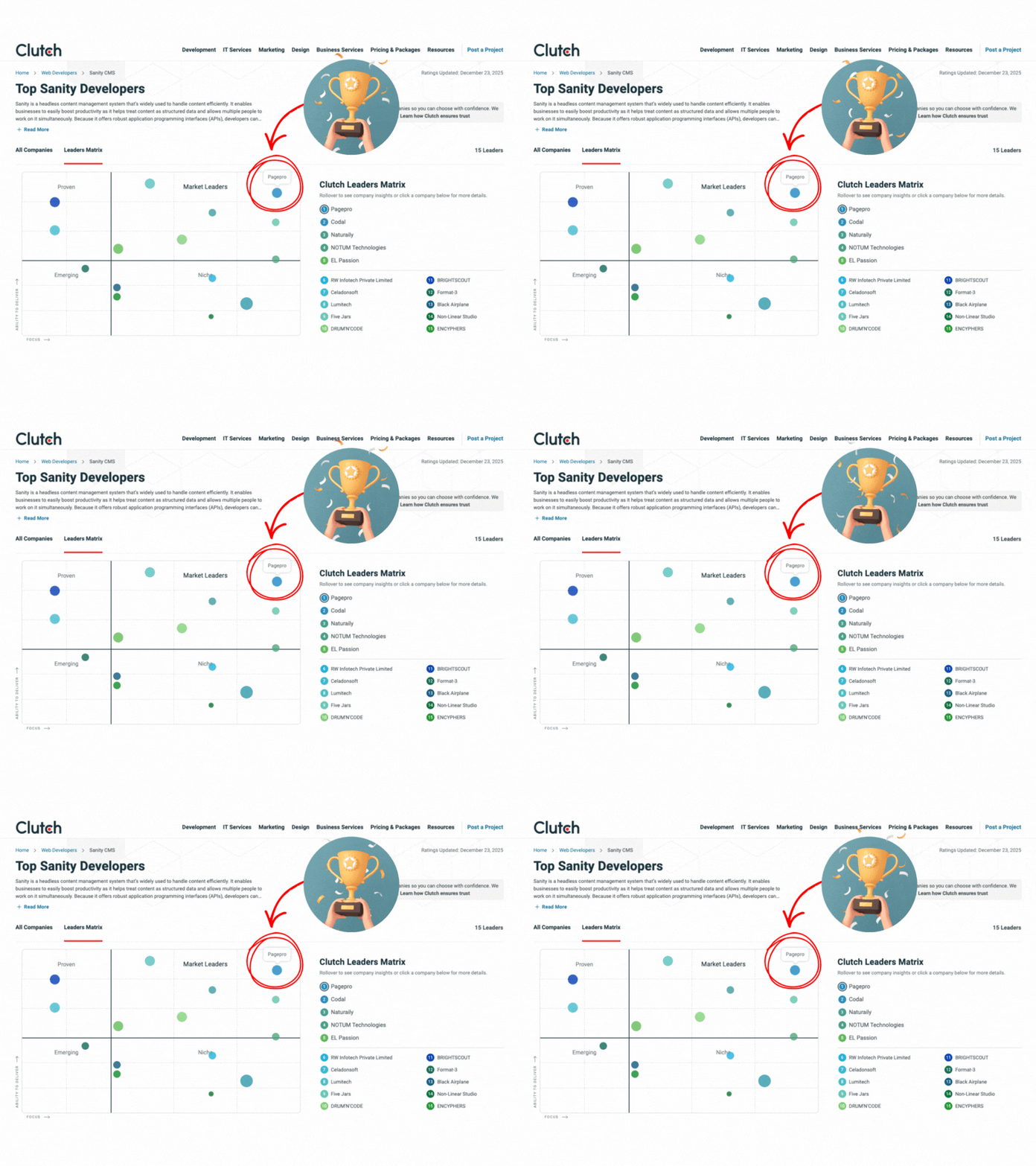
- Best Sanity development agency according to Clutch
Limitations
- Narrow stack may not suit non-Sanity/Next.js projects
- Best for mid-to-large scopes; smaller jobs might not align with process
Best For
Enterprise & SaaS scale-ups needing frictionless migrations and long-term Sanity expertise.
Notable Case Study
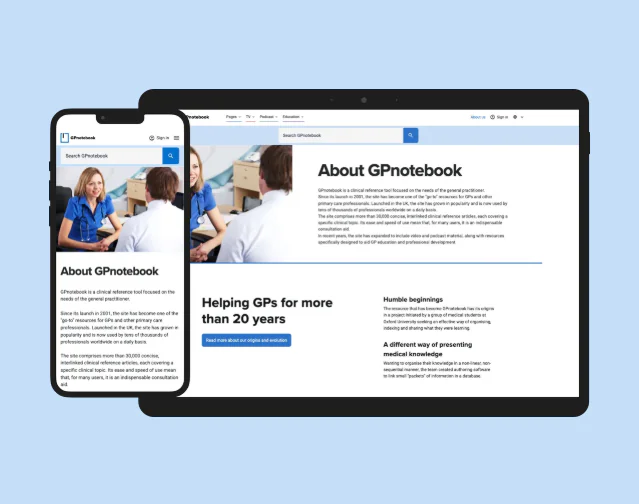
Pagepro helped OmniaMed modernize GPnotebook—a clinical reference site with 30,000+ articles—by rebuilding it on Next.js and Sanity. The migration replaced an outdated CMS, enabling faster updates, unified sub-brands, better performance, and scalable content workflows. The result improved editorial autonomy, reduced maintenance costs, and supported global expansion with enhanced UX and localization.
Get your free architecture review with Pagepro to see how we can help your stack.
#2 The Frontend Company – UI/UX-Focused Frontend Transformations & Headless Commerce

Overview
The Frontend Company (TFC) is a global frontend specialist with deep headless CMS experience, often pairing React/Next.js with Contentful, Sanity, Strapi, and Directus. They emphasize user-centric design and long-term partnerships, holding a 4.9–5.0 Clutch rating and high referral rates.
Key Services
- Headless CMS integrations and frontend builds
- UI/UX design for composable architectures
- Performance optimization and post-release support
- Migration and modernization projects
- Omnichannel content delivery
- Custom API orchestration
Technology Stack
- CMS: Contentful, Sanity, Strapi, Directus
- Frontends: React, Next.js
- Tools: Vercel, GraphQL, REST APIs
Strengths
- Exceptional referral rate (9.8/10) and 5/5 Clutch feedback on communication
- Strong UI/UX focus for engaging headless experiences
- Adaptable stack for client needs
Limitations
- Primarily frontend-heavy; may need partners for deep backend work
- Higher pricing for design-intensive projects
Best For
Brands seeking polished UI/UX in headless transformations and headless commerce.
Notable Case Study
Client project: Connected headless CMS to fast static sites, resulting in improved performance and client satisfaction (per Clutch reviews).
#3 Brainhub – Scalable SaaS & Enterprise Web Products with Headless Integrations

Overview
Brainhub is a Poland-based full-stack engineering agency building scalable web/mobile products with JavaScript/TypeScript, React/Next.js, and headless CMS like Contentful. They focus on cloud infrastructure and complex integrations, with strong Clutch ratings (4.8+).
Key Services
- Headless CMS development and integrations
- Custom frontend/backend builds
- Cloud scaling and infrastructure
- API development and optimization
- Long-term maintenance
Technology Stack
- CMS: Contentful, Strapi, Sanity
- Frontends: Next.js, React
- Tools: Node.js, .NET, cloud platforms
Strengths
- Reliable delivery for scalable products
- Full-stack expertise reduces handoffs
- Strong communication in reviews
Limitations
- Broader focus may dilute ultra-specialized headless depth
- Less emphasis on specific CMS partnerships
Best For
SaaS/enterprise teams needing robust, integrated headless solutions.
Notable Case Study
Scalable web products with headless CMS integrations, delivering high-performance outcomes (Clutch feedback).
#4 Naturaily – Multilingual eCommerce & Headless Migrations

Overview
Naturaily is a Polish agency with 13+ years in Jamstack, headless CMS, and eCommerce. They excel in Storyblok, Sanity, Strapi, and Shopify integrations, with a 4.9 Clutch rating and awards like Top Next.js Developers.
Key Services
- Headless migrations and Jamstack builds
- Multilingual/localization setups
- eCommerce headless integrations
- Performance optimization (Lighthouse 95+)
- Shopify + CMS connections
Technology Stack
- CMS: Storyblok, Sanity, Strapi
- Frontends: Next.js, React
- Tools: Shopify, Vercel
Strengths
- Proven multilingual/eCommerce expertise
- High Clutch scores and consistent delivery
- Fast, SEO-friendly results
Limitations
- Jamstack focus may limit non-JS stacks
- Primarily Europe/US clients
Best For
Multilingual eCommerce brands and headless migrations.
Notable Case Study
Implemented Storyblok + Next.js for multilingual sites, streamlining content and boosting performance (Clutch reviews).
#5 Bits Orchestra – Enterprise .NET + Headless Builds

Overview
Bits Orchestra specializes in .NET integrations with headless CMS like Contentful/Strapi, focusing on scalable enterprise solutions and custom APIs.
Key Services
- Headless CMS + .NET integrations
- Custom API development
- Enterprise scalability projects
- Migration support
Technology Stack
- CMS: Contentful, Strapi
- Frontends: Next.js, React
- Backend: .NET
Strengths
- Strong .NET/headless hybrid expertise
- Scalable, secure builds
Limitations
- .NET focus may not suit pure JS stacks
Best For
Enterprises with .NET backends needing headless frontends.
Notable Case Study
Custom headless builds with .NET, delivering scalable APIs (portfolio examples).
#6 9thCO – SEO-Friendly Migrations & Traffic Growth
Overview
9thCO focuses on SEO-optimized headless migrations using Contentful/Sanity, with omnichannel emphasis and strong client-centric approaches.
Key Services
- SEO-focused migrations
- Omnichannel content delivery
- Traffic/performance boosts
Technology Stack
- CMS: Contentful, Sanity
- Frontends: Next.js
Strengths
- Proven SEO and growth results
- Reliable partnerships
Limitations
- Narrower scope on SEO migrations
#7 Blazity – Multilingual Sites & eCommerce

Overview
Blazity excels in localization-heavy projects with Contentful, delivering fast MVPs and reliable multilingual headless sites.
Key Services
- Multilingual headless implementations
- eCommerce integrations
- MVP development
Technology Stack
- CMS: Contentful
- Frontends: React/Next.js
Strengths
- Localization expertise
- Quick, dependable delivery
Limitations
- Less broad CMS coverage
- Narrower Ecosystem Focus
- Not Positioned as a Full Headless Strategy Agency
- Scale Constraints of a Small Team
- Limited Public Evidence of Cutting-Edge Features
Ready to Migrate from your Legacy Setup?
#8 Culture Foundry – Full-Cycle Transformations & Strategy

Overview
Culture Foundry provides end-to-end headless strategy and development with Sanity/Contentful, focusing on creative problem-solving.
Key Services
- Full-cycle headless projects
- Strategy and deployment
- Custom solutions
Technology Stack
- CMS: Sanity, Contentful
- Frontends: Next.js
Strengths
- Strategic, innovative approach
- Enterprise readiness
Limitations
- May involve longer timelines for strategy
#9 SUNZINET – Large-Scale European Enterprises

Overview
SUNZINET serves European enterprises with compliance-focused headless CMS like Contentful/Strapi.
Key Services
- Enterprise compliance builds
- Multilingual scaling
- Secure integrations
Technology Stack
- CMS: Contentful, Strapi
- Frontends: React
Strengths
- Compliance/security expertise
- Large-scale delivery
Limitations
- Europe-centric focus
#10 SCube – Fintech & Content-Heavy Projects

Overview
SCube specializes in secure, custom modeling for fintech/content with Strapi/Contentful.
Key Services
- Secure API development
- Custom content models
- High-security projects
Technology Stack
- CMS: Strapi, Contentful
- Frontends: Next.js
Strengths
- Security-focused builds
- Custom modeling depth
Limitations
- Niche in high-security sectors
Headless CMS Development Cost in 2026
Headless CMS development projects typically range from $15,000 to $200,000+, depending on project scope, integration complexity, legacy migration requirements, and the team’s location and model. The table below breaks down where budget goes across a typical mid-size project (baseline: $50,000).
| Project stage | What it includes | % of budget | Est. cost ($50K project) |
|---|---|---|---|
| Discovery & architecture | Requirements, legacy CMS audit, content modeling strategy, solution design | 10–15% | $5,000–$7,500 |
| Frontend design & development | Component library, UI/UX, CMS-connected templates, responsive builds | 20–25% | $10,000–$12,500 |
| CMS setup & configuration | Platform setup (Sanity, Contentful, Strapi), content types, roles, workflows | 10–15% | $5,000–$7,500 |
| API integrations | Connections to CRM, ERP, eCommerce, analytics, and marketing tools | 20–30% | $10,000–$15,000 |
| Content migration | Schema mapping, data transfer, URL redirects, SEO preservation | 10–15% | $5,000–$7,500 |
| QA, performance & security | Testing, Core Web Vitals audits, security checks, load testing | 10–15% | $5,000–$7,500 |
| Training & documentation | Editor onboarding, workflow documentation, handoff materials | 5–10% | $2,500–$5,000 |
| Ongoing support & maintenance | Bug fixes, updates, performance monitoring, iterative improvements | 15–25% (ongoing) | $7,500–$12,500/yr |
What drives cost up
Integration complexity is the single largest cost variable. A headless CMS connected to a static marketing site costs a fraction of a platform integrated with a CRM, PIM, eCommerce backend, and analytics stack. Each integration requires custom API work, data mapping, and testing — expect integrations alone to consume 20–30% of total budget on enterprise projects.
Legacy migration scope significantly affects cost when moving from a monolithic CMS like WordPress or Drupal. Projects with 10,000+ pages, complex content structures, or SEO-sensitive URL architectures require careful mapping and redirect management. A migration-only project can start from $15,000; full platform modernisation with a new frontend typically runs $60,000–$150,000+.
Platform choice affects both licensing and implementation cost. Cloud-native platforms like Contentful carry monthly licensing fees ($300–$3,000+/month depending on plan) on top of development costs. Open-source options like Strapi eliminate licensing but increase self-hosting and maintenance overhead. Sanity offers a generous free tier for smaller teams with predictable scaling costs.
Team location and engagement model affects day rates significantly. Eastern European agencies (Poland, Ukraine) typically charge $60–$120/hour; UK and US agencies run $120–$250/hour for equivalent expertise. Fixed-price contracts reduce financial risk for well-defined scopes; time-and-materials suits iterative or complex projects where requirements evolve.
Typical budget ranges by project type
Small-scale migration or MVP ($15,000–$40,000): Moving a simple site (under 500 pages) from a monolithic CMS to headless, or building a new headless site from a defined component set. Minimal integrations, existing frontend framework, light content modeling.
Mid-size implementation ($40,000–$120,000): Full headless build or migration for a SaaS product or eCommerce brand. Includes custom content modeling, 2–4 integrations (CRM, analytics, commerce), performance optimization, and editor training.
Enterprise modernization ($120,000–$200,000+): Large-scale migration (10,000+ pages), multilingual content operations, complex API orchestration across ERP/CRM/PIM systems, compliance and security requirements, AI personalization hooks, and multi-team onboarding. Timeline: 6–12 months.
Hidden costs to budget for
Beyond development, factor in:
- CMS platform licensing — $0 (Strapi self-hosted) to $3,000+/month (Contentful enterprise)
- Hosting and CDN — $50–$500/month on Vercel or similar edge platforms
- Content re-entry or cleanup — often underestimated on migrations; legacy content rarely maps cleanly to new schemas
- Post-launch iteration — most teams need 2–3 months of post-launch refinement before the platform runs autonomously
For an accurate estimate on your specific project, the most reliable approach is a paid discovery phase ($3,000–$7,500) before committing to a full build. It surfaces architectural risks, integration complexity, and realistic timelines before significant budget is committed.
How to Choose the Right Headless CMS Development Company
Headless CMS development companies vary significantly in how they work, what they specialise in, and which project types they’re suited for. The right partner for a 50-page marketing site migration is rarely the right partner for a multilingual enterprise platform with ERP integrations. These four criteria narrow the field quickly.
1. In-house vs. hiring a headless CMS developer: when to outsource?
Building headless capabilities in-house makes sense if you have ongoing projects, a team with API and Next.js experience, and the bandwidth for infrastructure management and long-term maintenance.
Hiring an external headless CMS development company is the faster path when:
- Your team lacks experience with headless-specific patterns (content modeling, GROQ, GraphQL federation, ISR)
- You’re migrating from a monolithic CMS and can’t afford SEO disruption or downtime
- You need to ship in months, not quarters
- The project is defined enough to scope but not recurring enough to justify a full-time hire
In practice, agencies deliver 2–3× faster time-to-launch on headless projects compared to in-house teams building the capability from scratch — largely because migrations, content modeling decisions, and CMS configuration problems are already solved in their workflows.
2. CMS-first vs. frontend-first: which type of company fits your needs?
CMS-first companies prioritise content architecture — structured content modeling, editorial workflows, platform configuration, and API design. Choose them when your primary challenge is managing complex, reusable content across multiple channels or teams. Strong fit for: multilingual operations, content-heavy enterprises, omnichannel publishing.
Frontend-first companies prioritise the delivery layer — performance, Core Web Vitals, UI/UX, and composable frontend architecture. Choose them when your content structure is already defined and the challenge is speed, experience quality, and conversion. Strong fit for: eCommerce, high-traffic marketing sites, design-driven brands.
Full-stack headless specialists handle both layers end-to-end. These are the right choice for greenfield builds and complex migrations where content modeling and frontend architecture need to be designed together from the start.
When reviewing portfolios, look for evidence of the specific layer your project needs — a beautiful frontend portfolio doesn’t demonstrate CMS modeling depth, and vice versa.
3. Red flags to avoid
- No verifiable case studies. Clutch or G2 profiles with fewer than 10 reviews, or case studies that describe outcomes without specifics (“improved performance”, “faster publishing”), are weak signals. Look for measurable results: load time improvements, migration timelines, traffic retention post-launch.
- Single-platform lock-in without justification. An agency that recommends the same CMS for every project regardless of requirements is optimising for their own workflow, not yours. Good partners ask about your team’s technical capability, editorial workflows, and integration landscape before recommending a platform.
- Vague migration methodology. Migrations are where projects fail. Ask specifically: how do you handle URL redirects at scale? How do you validate content fidelity post-migration? What does your SEO regression testing process look like? Vague answers are a warning sign.
- No discovery phase. Reputable headless CMS companies offer a paid discovery phase before committing to a full build. Skipping it usually means either the scope is trivially simple or the agency is moving fast to close a contract before risks surface.
- Overpromising on timeline. A mid-size headless migration realistically takes 3–5 months. Anyone quoting 6 weeks for a complex platform is either scoping it too narrowly or hasn’t done one before.
4. Questions to ask before signing
These five questions surface the information that case studies and sales calls rarely volunteer:
- What CMS platforms do you have official partner status with? Partner status (Sanity, Contentful, Storyblok) means direct support access, early feature access, and verified delivery experience — not just familiarity.
- Can you walk me through a migration project that hit unexpected complexity? The answer reveals problem-solving capability and honesty more than any case study.
- How do you handle SEO preservation during migration? Specifically: redirect mapping, canonical management, content parity validation, crawl monitoring post-launch.
- What does your post-launch support model look like? Some agencies disappear after handoff. Understand whether support is retainer-based, ad hoc, or included.
- What’s your team composition for this type of project? You want to know if a senior architect scopes it and juniors build it, or if the people you meet are the people who do the work.
Quick self-assessment: do you need a headless CMS development company now?
Score each statement 1 (strongly disagree) to 5 (strongly agree):
- Our current CMS requires developer involvement for routine content updates
- We need to deliver content across more than one channel (web, app, IoT, or similar)
- We’re planning a migration and can’t afford traffic or ranking loss
- Our team lacks hands-on experience with API-first CMS platforms
- Performance and Core Web Vitals are a measurable business priority
Score 20–25: Hire a specialist headless CMS development company. The cost of delay or a failed in-house attempt will exceed agency fees.
Score 13–19: Engage an agency for the high-risk phases (architecture, migration, integrations) and hand off ongoing management to your team.
Score below 13: In-house is viable with the right tooling and a defined scope. Consider a short technical audit engagement to validate your approach before building.
If your score points to agency support, book a free 30-minute consultation with Pagepro — our Sanity/Next.js specialists can audit your stack and provide a tailored roadmap.
This guide empowers smarter decisions — focus on proven expertise, alignment with your stack, and clear value to avoid costly missteps. Ready to move forward? Let’s chat!
FAQ
Headless CMS development is the process of creating and integrating a content management system where the backend (content storage) is separated from the frontend (content display).
Content is delivered via APIs (REST or GraphQL) and can be used across websites, mobile apps, and other digital platforms.
This approach allows teams to reuse content across multiple channels while maintaining full flexibility over frontend technologies.
To build a headless CMS, follow these steps:
1. Choose a headless CMS platform
2. Define structured content models
3. Configure REST or GraphQL APIs
4. Build a frontend using frameworks like React or Next.js
5. Connect the frontend to the CMS via APIs
6. Deploy and optimize for performance and scalability
A headless CMS architecture keeps content management independent from presentation layers.
Popular headless CMS examples include:
– Sanity
– Contentful
– Strapi
– Storyblok
– WordPress when used in headless mode
These platforms are commonly used for websites, mobile apps, and omnichannel digital experiences.
There is no single most popular headless CMS for all use cases, but Contentful and Strapi are among the most widely adopted platforms worldwide.
Contentful is often chosen for enterprise-scale projects, while Strapi is popular for open-source and self-hosted implementations.
The cost of a headless CMS depends on the platform and project scope:
1. Open-source headless CMS: Free to use (hosting and development costs apply)
2. SaaS headless CMS: Typically ranges from $0 to $1,000+ per month
3. Enterprise headless CMS: Custom pricing based on usage and scale
Additional costs may include development, hosting, integrations, and maintenance.
A headless company is a business that adopts a headless architecture, where backend systems such as content, commerce, or services are decoupled from frontend user interfaces.
This setup enables faster iteration, better scalability, and consistent experiences across multiple digital channels.